- All
- Product Name
- Product Keyword
- Product Model
- Product Summary
- Product Description
- Multi Field Search
Views: 20 Author: Site Editor Publish Time: 2026-04-24 Origin: Site


Ringlock scaffolding is a modular scaffolding system used for construction, infrastructure, industrial maintenance, and temporary access projects. It is built with vertical standards, horizontal ledgers, diagonal braces, base jacks, steel planks, toe boards, and access systems that connect through rosette joints and wedge locks. With strong load capacity, quick assembly, and flexible configuration, ringlock scaffolding is widely selected for projects that require stable working platforms and efficient site installation.
● Ringlock scaffolding is a modular access system designed for strength, safety, and flexibility.
● Main ringlock scaffolding components include standards, ledgers, braces, base jacks, planks, toe boards, and ladders.
● Proper installation of ringlock scaffolding starts with ground preparation and base leveling.
● Bracing, platform placement, guardrails, and toe boards are essential for safe ringlock scaffolding use.
● Ringlock scaffolding should be inspected before, during, and after installation.
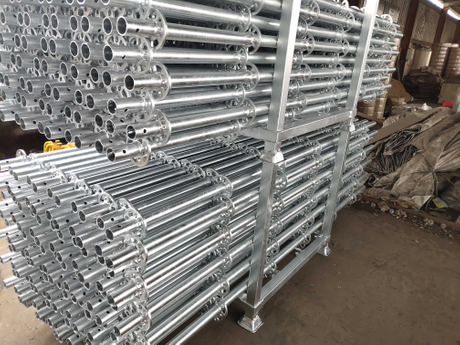
Ringlock vertical standards are the main upright supports of ringlock scaffolding. They carry vertical loads from platforms, workers, materials, and upper scaffold levels down to the base. Rosettes are welded at fixed intervals, allowing ledgers and braces to connect securely at different heights.
The quality of vertical standards directly affects the stability of ringlock scaffolding. Straight tubes, accurate rosette spacing, and reliable welding are essential for smooth assembly. If the standards are bent or poorly welded, the entire ringlock scaffolding structure may lose alignment.
Ringlock horizontal ledgers connect vertical standards and form the basic bay structure of ringlock scaffolding. They transfer loads between standards and support working platforms when used with steel planks. Ledgers also define the width and length of each scaffold bay.
Each ledger uses wedge heads that lock into the rosette connection. A tight wedge connection improves rigidity and reduces unnecessary movement. Accurate ledger length ensures that ringlock scaffolding remains square, balanced, and easy to assemble.
Diagonal braces are used to strengthen ringlock scaffolding against side movement. They connect standards diagonally and create a triangular support structure. This improves resistance against wind, vibration, uneven loading, and worker movement.
Without proper diagonal bracing, ringlock scaffolding may sway or deform during use. Braces are especially important for tall scaffolds, façade access, bridges, and industrial structures. Correct brace placement keeps ringlock scaffolding stable throughout the project.
Base jacks are installed at the bottom of ringlock scaffolding to level the structure. They allow height adjustment when the ground surface is uneven. A level base is necessary before upper components are installed.
Base jacks distribute vertical loads to the ground or supporting surface. They should be placed on firm ground, steel plates, or timber sole boards when required. Poor base adjustment can cause tilting, settlement, and unsafe ringlock scaffolding performance.
Steel platforms or planks create the working surface of ringlock scaffolding. They allow workers to stand, move, and place tools or materials safely. Anti-slip surfaces are commonly used to improve grip in outdoor or wet conditions.
Planks must match the scaffold bay size and sit securely on the supporting ledgers. They should have sufficient load capacity for the intended work. Damaged, bent, or unstable planks should not be used in ringlock scaffolding systems.
Toe boards are installed along platform edges to prevent tools and materials from falling. They are an important part of ringlock scaffolding edge protection. Toe boards also help define safe working areas on elevated platforms.
In many projects, toe boards are used together with guardrails and mid-rails. This combination reduces fall hazards and protects workers below the scaffold. Properly fixed toe boards improve the overall safety of ringlock scaffolding during daily operation.
Ladders and staircases provide vertical access within ringlock scaffolding. They allow workers to move between levels without climbing on standards or ledgers. A dedicated access route improves both safety and site organization.
For taller structures, stair towers are often preferred because they provide easier and more stable movement. Ladders should be securely attached and positioned away from high-risk work zones. Safe access planning is a key part of ringlock scaffolding installation.
Component | Main Function | Key Requirement |
Vertical Standard | Main upright support | Straight tube and accurate rosette spacing |
Horizontal Ledger | Bay connection and platform support | Correct length and secure wedge lock |
Diagonal Brace | Lateral stability | Proper angle and firm connection |
Base Jack | Ground leveling | Stable support and height adjustment |
Steel Plank | Working platform | Anti-slip surface and load capacity |
Toe Board | Edge protection | Secure fixing along platform edges |
Ladder/Stair | Vertical access | Safe and stable connection |
Before installing ringlock scaffolding, the ground must be checked for stability, levelness, and load-bearing ability. Soft soil, loose debris, standing water, and uneven surfaces should be corrected before assembly begins. A poor foundation can affect the alignment and safety of the entire ringlock scaffolding structure.
The installation area should also be cleared of unnecessary materials. Workers need enough space to place components, move safely, and build the scaffold in sequence. Good site preparation reduces installation problems and improves ringlock scaffolding efficiency.
Base jacks should be placed according to the scaffold layout drawing or planned bay spacing. Each base jack must sit firmly on the ground or a proper support plate. The height should be adjusted carefully to create a level starting point for ringlock scaffolding.
Base collars or starter pieces are then installed above the base jacks. These components create the first connection level for ledgers. Correct positioning at this stage is important because any error may continue upward through the ringlock scaffolding system.
Vertical standards are placed onto the base collars to begin forming the scaffold frame. Workers should check that each standard is upright and properly seated. The rosette positions should face the correct directions for ledger and brace connection.
At this stage, ringlock scaffolding should not be built too high before the lower level is fully secured. Temporary alignment checks reduce the risk of instability. Correct vertical installation improves the strength and appearance of the completed ringlock scaffolding system.
Horizontal ledgers are installed between standards to form the first rectangular bay. The wedge heads should be inserted into the rosettes and locked firmly with a hammer. This creates the basic frame of ringlock scaffolding.
Ledgers must be installed level and in the correct sequence. They hold the standards in position and prepare the structure for bracing and platforms. If ledgers are loose or uneven, ringlock scaffolding may become difficult to align at higher levels.
Diagonal braces should be installed after the basic frame is formed. They connect across the standards and prevent side movement. Proper bracing is essential for maintaining the rigidity of ringlock scaffolding.
Braces should be placed according to the scaffold design and site requirements. Tall structures, exposed locations, and heavy-duty platforms may require additional bracing. Correct brace installation keeps ringlock scaffolding stable under working loads.
Steel planks are installed on the ledgers to create a safe working platform. Each plank should sit securely without excessive gaps or movement. Workers should check that planks are not damaged before using them.
The platform must be wide enough for the intended task and safe movement. Overloading should be avoided because every ringlock scaffolding platform has a designed capacity. Proper plank placement improves both safety and working efficiency.
Guardrails, mid-rails, and toe boards should be installed on exposed edges of ringlock scaffolding platforms. These components reduce fall risks and prevent materials from dropping. They should be fixed securely before the platform is used.
Ladders or stair systems should then be installed in designated access areas. Access components must be stable, clear, and easy to reach. A safe access route keeps workers from climbing on ringlock scaffolding structural members.
Installation Step | Main Action | Safety Focus |
Site preparation | Clear and level the ground | Stable foundation |
Base setup | Place base jacks and collars | Accurate alignment |
Standards | Install vertical supports | Upright positioning |
Ledgers | Connect horizontal members | Secure wedge locking |
Braces | Add diagonal support | Lateral stability |
Planks | Build working platform | Load capacity and anti-slip surface |
Protection | Install guardrails and toe boards | Fall and object protection |
All ringlock scaffolding components should be inspected before installation. Standards, ledgers, braces, planks, and base jacks should be free from cracks, severe corrosion, deformation, or damaged connectors. Defective parts should be removed from use immediately.
Inspection is especially important for reused ringlock scaffolding. Repeated transport and assembly can cause wear on wedge heads, rosettes, and plank hooks. Component checking reduces safety risks before workers begin installation.
Ringlock scaffolding should be installed from the base upward in a controlled sequence. The lower level should be leveled, connected, and braced before higher levels are added. This keeps the structure stable during each stage of installation.
Skipping steps can create hidden risks in ringlock scaffolding. For example, placing planks before proper bracing may cause instability. A clear installation sequence improves consistency and reduces human error.
Every ringlock scaffolding platform has a load limit based on design, bay size, steel grade, and plank capacity. Workers should avoid placing excessive materials on one platform area. Concentrated loads can create stress and reduce structural safety.
Materials should be distributed evenly across the platform. Heavy items should be placed according to project guidelines and scaffold design. Proper load control keeps ringlock scaffolding safe during active work.

Poor base leveling is one of the most common ringlock scaffolding installation problems. If the base jacks are not adjusted correctly, the scaffold may lean as height increases. This can affect both stability and platform safety.
Uneven ground should never be ignored during setup. Workers should use suitable base plates or sole boards when required. A stable and level foundation is the first condition for safe ringlock scaffolding installation.
Missing braces can weaken ringlock scaffolding even when standards and ledgers appear secure. Diagonal braces provide lateral resistance and prevent movement under wind or working loads. Without them, the structure may become unstable.
Incorrect brace positioning can also reduce system performance. Braces should follow the design layout and connect firmly to rosettes. Proper bracing keeps ringlock scaffolding rigid and reliable.
Loose wedges reduce the strength of ringlock scaffolding joints. Every wedge connection should be fully seated and tightened during installation. A loose ledger or brace can create movement and affect the entire frame.
Workers should recheck connections after each level is completed. Vibration, handling, or incomplete locking may cause weak points. Regular connection checks improve ringlock scaffolding safety on site.
The material of ringlock scaffolding affects its load capacity, durability, and service life. Q235 and Q345 steel are commonly used depending on project requirements. Heavy-duty ringlock scaffolding often requires stronger material and stricter quality control.
Buyers should confirm tube diameter, wall thickness, and steel grade before purchasing. These specifications determine how the system performs under load. Clear material data supports safer ringlock scaffolding selection.
Welding quality is critical because ringlock scaffolding depends on strong rosette and connector joints. Welds should be clean, consistent, and strong enough for repeated use. Poor welding may reduce load performance and create safety risks.
Surface treatment also affects durability. Hot-dip galvanized ringlock scaffolding offers strong corrosion resistance in outdoor and industrial environments. A uniform galvanized coating protects the steel and extends service life.
Ringlock scaffolding components should match in size, connection design, and system standard. Incompatible parts may not lock correctly or may create uneven alignment. This can slow installation and reduce structural reliability.
Project fit should also be considered before ordering. Bay size, height, platform width, access method, and load requirements should match the jobsite conditions. Correct component selection makes ringlock scaffolding installation smoother and safer.

Ringlock scaffolding is a strong, flexible, and efficient system for construction, infrastructure, and industrial access projects. Its main components, including standards, ledgers, braces, base jacks, steel planks, toe boards, and access systems, work together to create a stable and practical working structure. Proper installation, correct bracing, secure wedge locking, and regular inspection are essential for safe ringlock scaffolding performance. Nanjing Uni-Tech Metalwork Company Ltd. supplies ringlock scaffolding systems and components for projects that require reliable structure, durable materials, and professional scaffolding solutions.
The main components of ringlock scaffolding include vertical standards, horizontal ledgers, diagonal braces, adjustable base jacks, steel planks, toe boards, ladders, and stair access systems. These parts connect through rosettes and wedge locks to form a stable scaffold. Each component has a specific function in load support, access, stability, or protection.
Ringlock scaffolding installation starts with site preparation and base jack leveling. Standards are then installed, ledgers are connected, braces are added, and platforms are placed. Guardrails, toe boards, and access systems should be installed before the scaffold is used.
Ringlock scaffolding is easier to assemble than many traditional systems because it uses wedge-lock connections. The modular design reduces loose parts and allows faster installation. However, trained workers should still follow proper procedures to ensure safe assembly.
Diagonal braces improve the lateral stability of ringlock scaffolding. They reduce sway and help the structure resist wind, vibration, and uneven loading. Without proper bracing, ringlock scaffolding may lose rigidity and become unsafe.
Ringlock scaffolding can be reused many times if it is properly maintained. Components should be inspected for deformation, corrosion, cracks, and damaged connectors before each use. Hot-dip galvanized ringlock scaffolding usually offers better durability for repeated use.